The harder job for solar begins when the grid stays on

By Martin du Plooy, R&D Manager at Stage Zero
For several years, residential solar in South Africa focused on delivering backup electricity. Customers wanted protection from frequent load shedding and disruptive outages. The immediate value of a battery was easy to understand, and much of the industry—including Stage Zero—developed products around that need.
But when load shedding eased sharply during 2024, the engineering challenge shifted. The everyday value of a solar system increasingly depended on how effectively it could reduce the amount of electricity customers needed to buy from the grid. The question became: what can solar and battery actually do for households during normal daily operation?
A different problem needs a different design
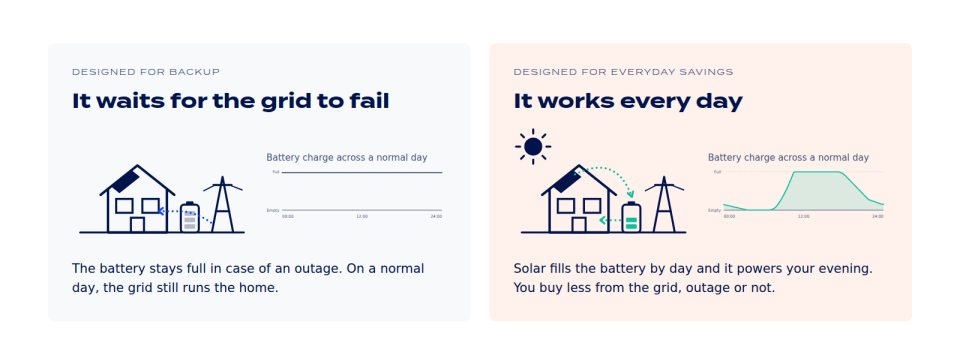
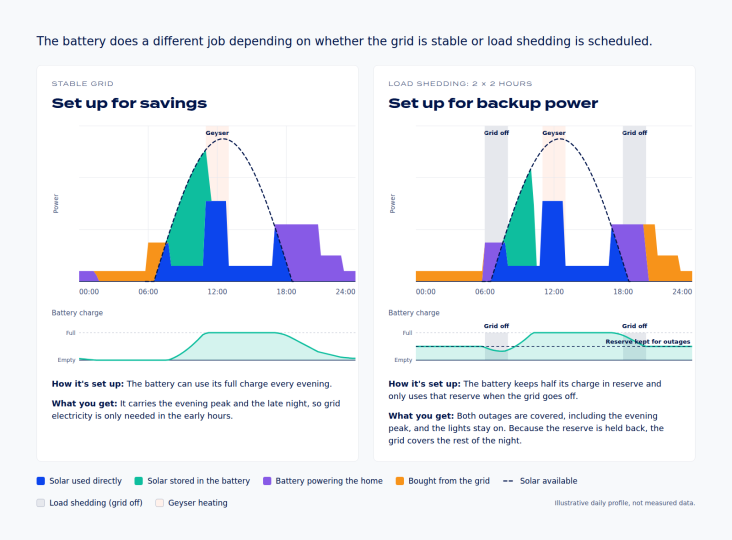
A system designed primarily for backup expects the grid to disappear periodically. The battery’s role is obvious, it carries the household through those interruptions.
When the grid is more stable, however, simply having stored backup power is no longer the main reason for investment. The system has to work harder during normal operation by helping the household use as much of its own solar energy as possible. That required our R&D team to reconsider what we were optimising for.
More panels are not always the answer
It is easy to assume that getting more value from solar means putting more panels on the roof. In reality, the relationship between solar generation and battery storage is what determines how much grid electricity a household avoids.
During the day, the system must do two jobs at once:
- Put enough energy aside to charge the battery for later use.
- Run the household directly off solar.
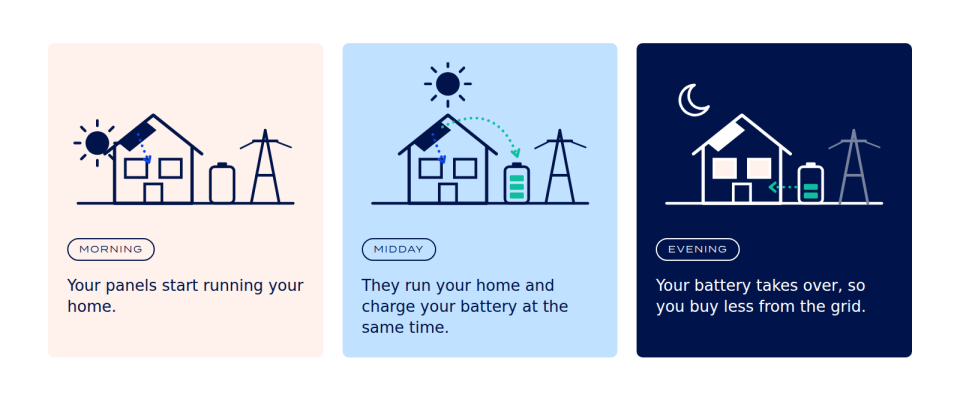
Get that balance wrong, and households end up buying grid electricity at night, even after a sunny day. More panels alone do not solve the problem if the wider system is not configured appropriately.
The evolving role of batteries
During heavy load shedding, battery capacity was closely associated with how long a household could remain powered during an outage. As cost optimisation became a greater priority, battery storage also became a way to reduce reliance on grid electricity after daylight hours.
This is a different engineering conversation from backup alone. Stored solar energy now extends the usefulness of daytime generation into the evening, helping households save money as well as stay powered.
Off-grid is a different game
There is an important distinction between reducing grid dependence and removing the grid entirely. Going fully off-grid requires a system capable of carrying the property without grid support, even on cloudy days or during high demand. That means a lot more battery capacity, which changes the financial equation for most households.
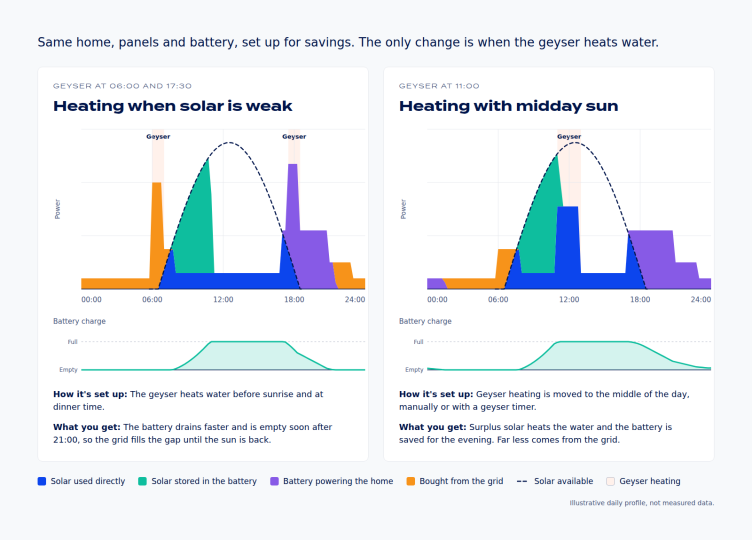
The smarter path is not just adding capacity, but shifting when the household draws power. For example, running the geyser at optimal times reduces the battery needed to cover the same gap. Smarter use, not just bigger batteries, is how households get closer to off-grid.
Solar has become an optimisation problem
Backup still matters, but the everyday question customers are asking is simpler: can solar and battery actually save them money? With electricity prices only moving upward, the real value lies in month-to-month savings, not just emergency protection.
And if load shedding does return, households are not starting from nothing, the system has already been managing its own battery to get the best out of every day. That means they are covered either way.
Designing for today’s problem
For Stage Zero’s R&D team, the shift reflects the need for solar products to keep evolving as customer requirements change. The engineering brief has moved from emergency backup to everyday optimisation. Our job is to keep designing for the problem customers have now: making solar and battery work together to deliver real value every day.
Already a Stage Zero customer?
If load shedding and power outages are not affecting your area, open your Stage Zero app and check that your system is set to max savings mode. That way, your battery works to lower your bill every day, not just when the grid goes down. Not sure which setting suits your home? Our service centre can help.